Start with the kitchen path
A kitchen rug should support a real standing or walking zone without becoming an obstacle. Measure the length of the cabinet run, the space in front of the sink or range, and the route between work areas. A runner that extends too far can catch a door or sit in a turning path; one that is too short may not cover the area where fatigue and spills are most common.
Mark the intended outline with tape and open drawers, the oven, the dishwasher, and the refrigerator. Include the space needed to stand and step backward. The rug is part of the working layout, so its size should be tested with the kitchen in use rather than chosen from a room photograph.
Choose size, shape, and low profile
Runners suit long galley kitchens and narrow work zones, while small rectangular mats can sit at a sink or prep station. Compare the finished length and width, not only the category name. A low profile helps doors and appliance panels clear the edge, but an extremely thin rug may offer less cushioning underfoot.
Check corners, edge binding, and the transition to bare floor. Rounded ends can change how the rug reads and may reduce a sharp trip point. A longer runner creates continuity and may need more frequent washing. Choose the smallest coverage that protects the intended work zone and leaves a clean route around it.
Inspect pile, weave, and water response
Kitchen rugs encounter crumbs, grease, water, flour, and dropped utensils. A low pile or flat weave is easier to vacuum and less likely to catch chair legs. A cushioned construction can feel more comfortable while holding more moisture. Compare the top fiber, backing, edge finish, and whether the maker gives guidance for wet spills.
Texture affects cleaning as well as appearance. A pattern can disguise small marks, but a dense pile can trap debris. Natural fibers, synthetics, and blends behave differently when washed. Read the complete care instructions and avoid assuming that a decorative rug can be treated like a towel or bath mat.
Treat the backing as a separate specification
The backing keeps the rug stable and protects the floor, but materials are not universal across surfaces. Rubber, latex, PVC, woven backing, and adhesive-like coatings may respond differently to wood, tile, stone, and vinyl. Check the manufacturer’s compatibility warning and place the rug on a clean, dry floor.
A non-slip claim does not remove the need to inspect movement. Test the rug when dry, when the floor is clean, and after washing. Corners can curl if the rug is folded, dried incorrectly, or stored damp. Do not place a wet rug in the working path. Follow the stated drying method before returning it to the floor.
Read the washable claim carefully
Machine washable can describe a specific cycle, temperature, load size, and drying method. Check the maximum dimensions for your washer and whether the rug needs a commercial machine. A large runner may fit in a household washer only when folded in a particular way, or it may need air drying rather than a dryer.
Confirm whether the backing can be exposed to heat and how often the rug may be washed. Remove crumbs before washing, use the recommended detergent, and avoid overloading the machine. Keep the care label and packaging until the rug has completed a wash test. A washable rug is useful only when the required maintenance fits your home.
Plan the household routine
The right rug depends on how the kitchen is used. A household with frequent cooking, children, pets, or heavy foot traffic may value a pattern, quick drying, and easy vacuuming. A quieter kitchen may prioritize a softer surface or a more specific color. Consider whether a second rug is needed while the primary one dries.
Keep the rug away from open flames, heating elements, and appliance vents. If it sits in front of a sink, check how quickly it can dry after splashes. Lift and clean beneath it so moisture and grit do not mark the floor. A rug should reduce fatigue and visual noise without creating a new cleaning problem.
Check the rug against appliances and doors
A kitchen runner can sit beside an island, in front of a sink, or along a cabinet wall, but the appliance clearances must remain unchanged. Open the oven, dishwasher, refrigerator, and lower drawers while the rug is in place. A thick edge or curled corner can become a trip point exactly where a person steps backward with a hot dish.
Measure the distance between the rug and the opposing cabinet or island. If stools slide under an island, make sure the rug does not catch their feet. Keep the runner clear of heating elements and areas where a damp textile could contact an electrical connection. Small gaps at the edge are often safer than forcing a rug into every inch of floor.
Rotate, dry, and inspect over time
Even a washable rug benefits from rotation when the pattern and shape allow it. Rotation can spread wear near the sink, range, or most-used path. Inspect the binding, backing, corners, and underside after washing. A rug can remain visually attractive while its backing begins to crack, curl, or transfer material to the floor.
Set a routine for lifting the rug, vacuuming the floor, and allowing both surfaces to dry. Store the runner rolled or folded only as the maker permits. Keep a second mat available when the main rug is in the wash, and replace a rug that will not lie flat or stay stable. Washability is useful when stability remains intact.
Coordinate pattern with the kitchen
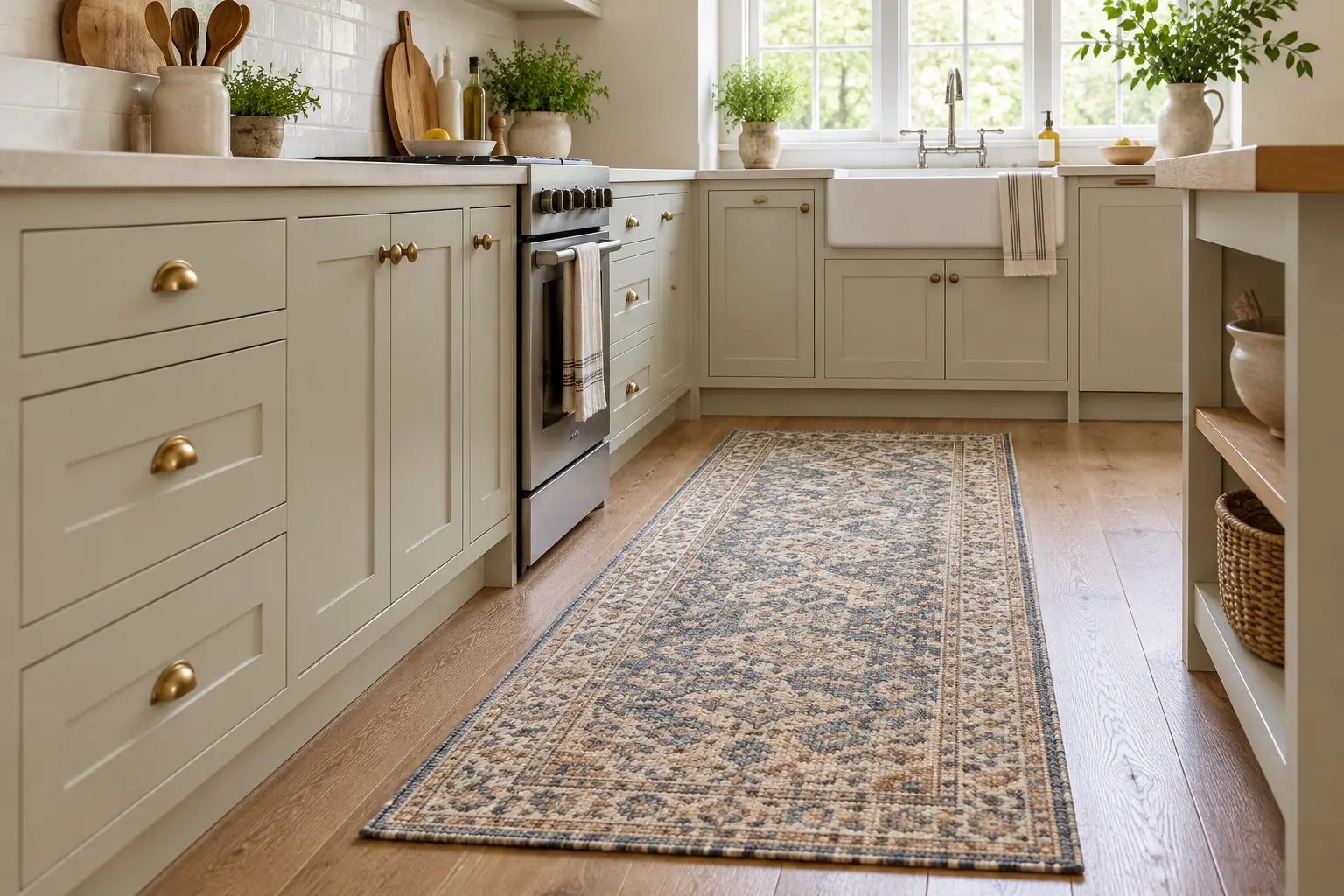
Pattern can hide small crumbs and splashes, but it also changes how busy the kitchen feels. Compare the rug’s contrast and undertone with the cabinet fronts, countertop, backsplash, and hardware. A strong pattern may need quieter towels and accessories; a subtle runner can connect wood, stone, and painted surfaces without competing with them.
Use a sample or photograph the rug beside the actual floor when possible. Light from a window and overhead fixtures can shift the color. Choose a design that remains legible when the rug is partially covered by an open door or person. Visual fit is secondary to safety, but it helps the runner feel like a considered part of the room.
Final cleaning and replacement test
After the first wash, inspect whether the rug lies flat, whether the edges remain straight, and whether the backing has changed. Check the floor beneath it for transfer, trapped moisture, or color variation. A cleaning claim should be judged by the complete cycle your household can perform, not by the label alone.
Replace the rug when it curls, slides, sheds backing, or cannot be cleaned without damage. A lower-cost runner that remains stable and dries quickly can be more useful than a thicker design that spends most of its life waiting for care. The practical goal is a clean, predictable walking surface.
Delivery, returns, and final checklist
Before ordering, confirm length, width, pile, top fiber, backing, edge binding, floor compatibility, wash cycle, drying method, package size, color, delivery, and returns. Inspect the rug for odor, curled edges, damage, and backing defects. Keep the packaging until it lies flat and has been tested in the intended spot.
The best washable kitchen rugs and runners protect a real work zone, stay stable on the floor, and can be cleaned with the equipment and time you have. Choose the size around the cabinets, the backing around the floor, and the care method around the household. Verify current specifications before purchase because wash instructions and materials vary by model.