Define the chair’s job
A boucle accent chair can fill a reading corner, add a guest seat, anchor a bedroom, or provide a place to put on shoes. Those jobs need different levels of support and clearance. Start with the person using the chair and the amount of time they will sit. A sculptural chair may photograph well and feel awkward for a long reading session.
Decide whether the chair should support upright posture, relaxed lounging, occasional seating, or a decorative pause in the room. Then compare seat height, seat depth, back height, arm height, and cushion firmness as one group rather than judging the fabric first.
Measure the footprint and circulation
Record overall width, depth, height, and the space needed to move around the chair. Mark the complete footprint with tape, including the side table or lamp that will sit beside it. A round or curved chair can appear compact while still occupying more turning space than a straight-backed chair.
Check doors, drawers, vents, rugs, and nearby seating. Leave a useful route to the window, bed, desk, or sofa. If the chair will sit in a corner, verify that the back does not block a baseboard heater or rub against the wall. The room’s circulation is part of the chair’s specification.
Compare seat height and support
Seat height changes how easily a person sits down and stands up. Seat depth changes whether the feet reach the floor and whether the back can support an upright posture. Compare the finished measurements with a chair that already feels comfortable. A deep lounge shape may suit taller users and overwhelm a smaller frame.
Inspect the frame, webbing, springs, foam, fiber, or other support details provided by the maker. A soft cushion can compress and lower the effective sitting height. Check whether the back is fixed, loose, or removable, and whether the chair has a stated load limit. Do not infer support from a rounded silhouette.
Understand boucle fabric
Boucle describes a looped or nubby yarn surface, not one universal fiber or durability level. The fabric may be wool, cotton, polyester, acrylic, or a blend. Look for the composition, rub or durability information when supplied, seam construction, and the direction of the loops. A dense surface can feel plush while a loose loop may catch more easily.
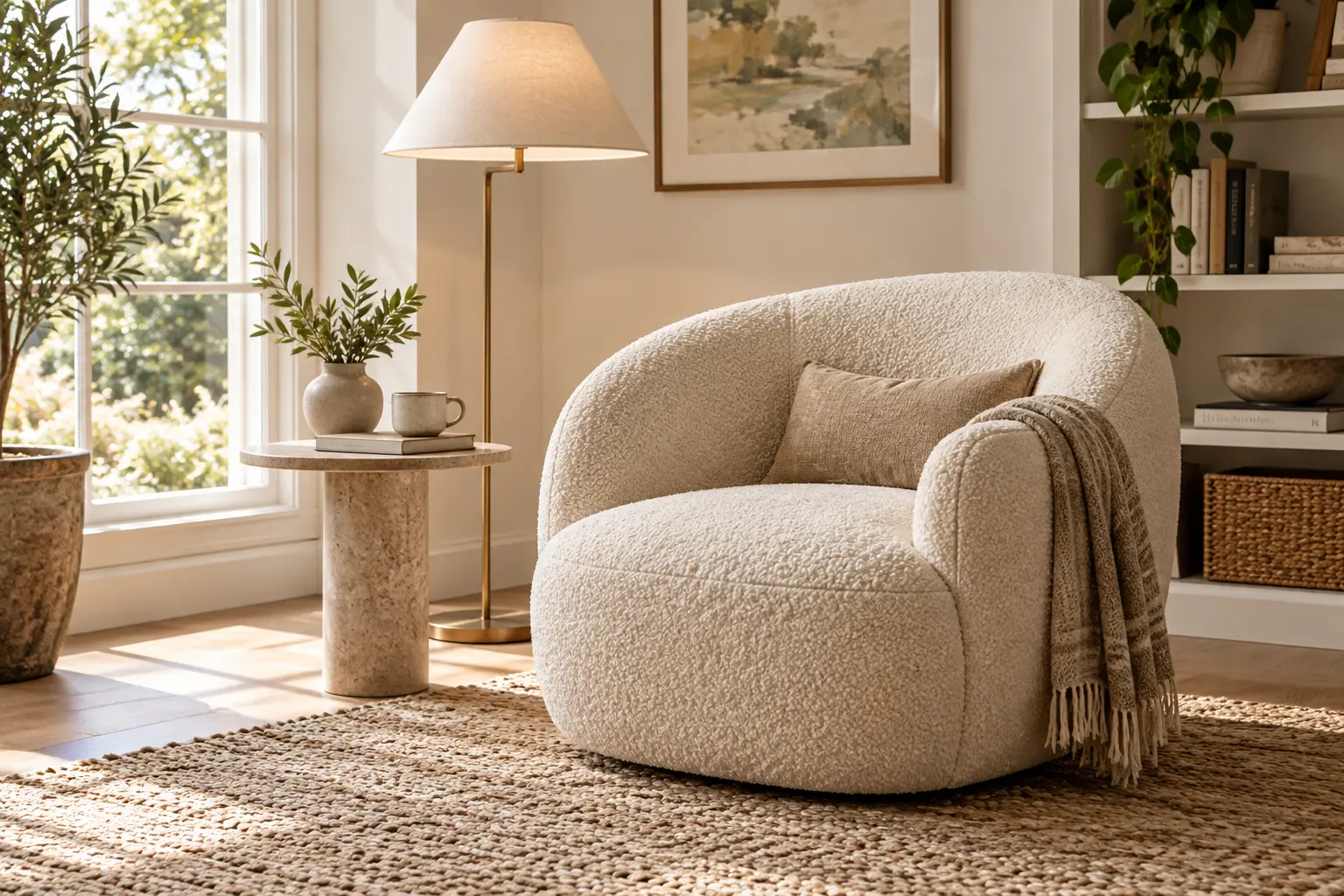
Texture also changes how a chair looks in light. Cream and ivory boucle can add softness and show the weave clearly; darker colors may hide small marks while revealing lint. Ask for a current sample when available and compare it with the room’s rug, curtains, and upholstery. Screen color is not a reliable substitute for a fabric sample.
Plan cleaning and household use
Food, drinks, skin oils, pet hair, and dust interact with a textured surface. Read the cleaning code and care instructions before choosing the chair for a high-traffic room. A removable cover can help only when the maker explains washing, drying, and replacement. Do not apply a household cleaner to an unidentified upholstery finish.
Use the chair’s construction to set expectations. A loose boucle can need gentle vacuuming with an upholstery attachment, while a tightly woven performance fabric may allow a different routine. Keep sharp objects, rough bags, and pet claws in mind. A pale textured chair can be practical in a calm room and demanding in a busy one.
Check legs, floor contact, and delivery
Leg material and placement affect stability, visual weight, and cleaning underneath. Check whether the feet are level, whether pads are included, and whether the chair sits safely on the intended floor. A curved base can change the way the chair moves when someone sits. Follow the maker’s instructions and do not assume a decorative foot is designed to be repositioned.
Measure the package and route through doors, stairs, elevators, and tight turns. Inspect the upholstery, seams, legs, and hardware before removing packaging. Keep the box until the chair is stable and the return period is understood. Furniture returns can be costly or restricted after assembly, so document damage as soon as it appears.
Match the chair with the room’s visual weight
Boucle already brings a strong tactile signal, so the surrounding pieces can stay quieter. Compare the chair with the sofa, rug, curtains, and largest wood or metal finish. A rounded chair can soften a room full of straight lines; several rounded pieces can make a small room feel crowded. Use a temporary footprint and a fabric sample when possible.
Color changes the perceived size. Ivory and cream keep the silhouette light but show shadows and marks. Camel, gray, and darker neutrals can connect with a broader palette while revealing lint or flattened loops in certain light. Choose the tone that works with the actual room instead of relying on a warm screen image.
Test the daily sitting position
Use a temporary chair or mark the seat position to check the relationship with a side table, lamp, window, and television. The person should be able to sit, stand, place a book, and reach a light without twisting around the furniture. A chair purchased for reading needs a usable table height and enough clearance for a book or device.
Check the back angle and arm height with the intended activity. A low back can suit occasional conversation and give little support for longer sessions. A deep seat may need a cushion for shorter users, which changes the effective depth. These tests reveal whether the boucle accent chair is a useful seat or only a decorative object.
Check proportions with adjacent furniture
A chair can be comfortable on its own and still look misplaced beside a sofa or bed. Compare the seat height with nearby seating, the arm height with the side table, and the back height with the window or artwork behind it. Leave enough visual and physical space between pieces so the chair reads as an intentional accent rather than a blockage.
If the chair is part of a conversation group, angle it toward the sofa without narrowing the walking route. If it is a bedroom chair, keep the dresser and wardrobe doors clear. A small table, lamp, or footstool changes the occupied footprint, so include those pieces in the plan before deciding that the chair fits.
Final boucle accent chair checklist
Before ordering, confirm overall dimensions, seat height, depth, back height, arm height, frame, cushion fill, upholstery fiber, cleaning code, load guidance, legs, floor protection, package size, delivery, and returns. Mark the chair and the clearance around it in the room. Test the intended reading or conversation position with a temporary chair if possible.
The best boucle accent chair combines tactile texture with support and practical care. Choose the seat around the user, the fabric around the household, and the footprint around the room’s circulation. Verify current product details on the retailer or manufacturer page before buying.