
Why choose a patterned headboard
A patterned headboard is one of the simplest ways to give a bedroom character. It sits at eye level when you enter the room, it frames the bed, and it adds color and texture without painting walls or buying new bedding.
Patterns range from quiet stripes and small geometrics to bold florals, ikats, and block prints. Because the headboard is a large surface, the pattern you choose sets the tone for the whole room.
The practical side matters as much as the print. Size, fabric, cleaning, and mounting all decide whether the headboard looks right and stays looking good. This guide covers each step.
Size the headboard to the mattress
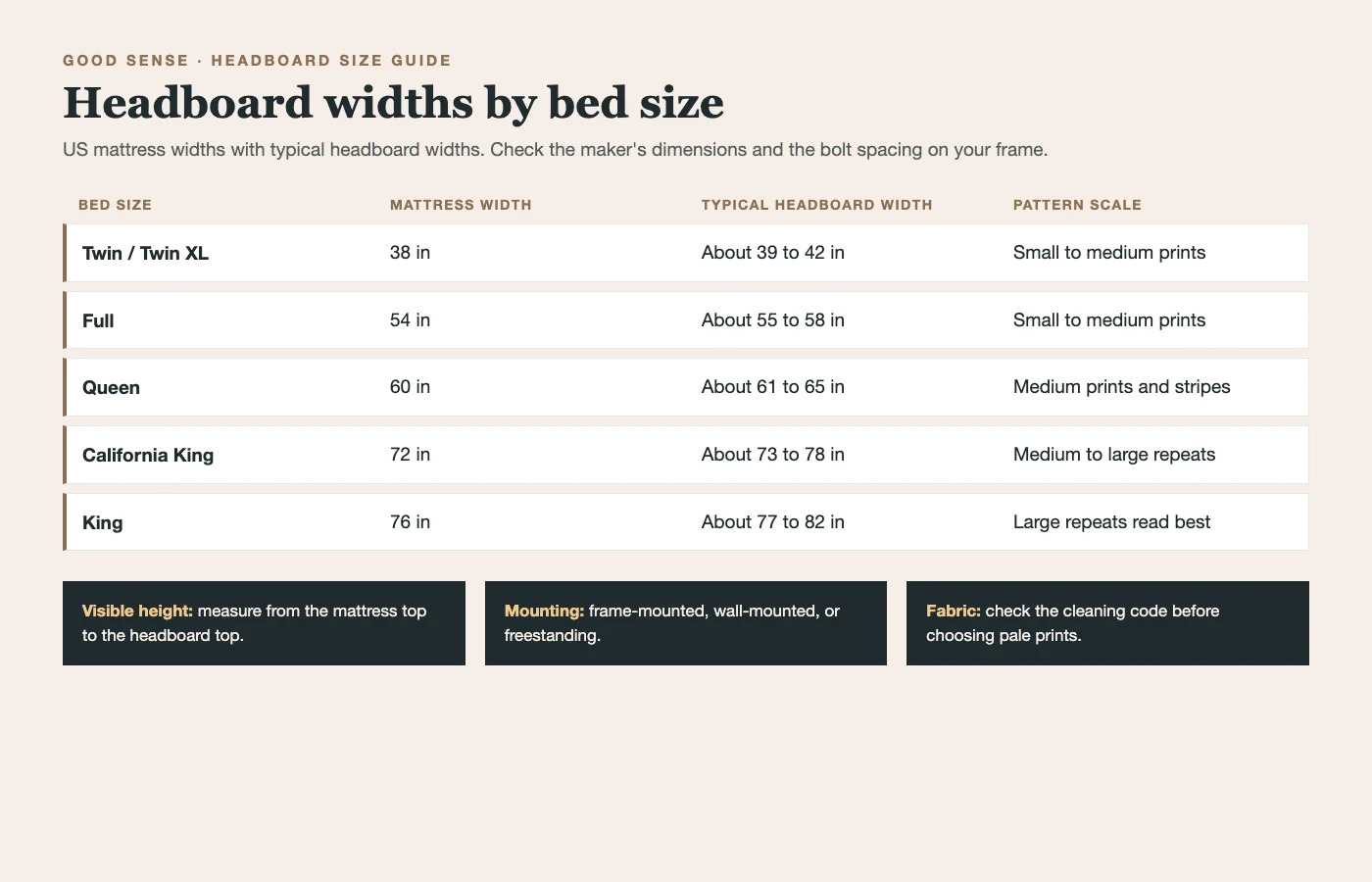
Start with the mattress width. In the US, twin mattresses are about 38 inches wide, full about 54, queen about 60, California king about 72, and king about 76. Headboards are usually a little wider than the mattress so they frame the bed neatly.
Then consider height. Measure how much of the headboard will show above the mattress and pillows. Tall headboards make a strong statement and suit high ceilings; lower ones keep a small room feeling open.
If you have bedside tables, check that the headboard width leaves room for them, and that lamps and switches will not be blocked.
Match pattern scale to the bed
Pattern scale is the size of the motif and how often it repeats. Small prints read almost as texture from across the room. Large repeats look bold and need enough surface to show the full design.
On twin and full headboards, small to medium prints usually look balanced. Queen headboards handle medium prints and stripes well. King and California king headboards have room for large florals or wide geometric repeats.
Look at how the pattern is centered. On good upholstery, the main motif sits in the middle of the headboard and repeats evenly toward the edges. Ask for a photo of the full headboard if the listing only shows a swatch.
Choose the upholstery fabric
Linen and cotton blends look relaxed and suit block prints and florals, but they can wrinkle and stain more easily. Polyester and performance fabrics resist stains and fading and are easier to clean.
Velvet with a printed or woven pattern adds depth and works well in moodier rooms. Woven jacquards have the pattern built into the weave, which tends to wear better than a printed surface.
Check the cleaning code: W for water-based cleaners, S for solvent, WS for either, X for vacuum only. Headboards collect skin oils and hair products where you lean, so a W or WS fabric is easier to keep fresh.
Frame-mounted, wall-mounted, or freestanding
Frame-mounted headboards bolt to the bed frame. Check that the bolt holes line up with your frame and that the bracket heights work with your mattress height. Many headboards include adjustable legs or slots for this.
Wall-mounted headboards hang on a cleat or brackets. They feel very stable and keep the floor clear but need secure fixing into wall studs or suitable anchors.
Freestanding headboards have their own legs and stand behind the bed. They are flexible but can shift unless the bed is pushed firmly against them. Whatever the type, make sure the headboard does not wobble when you lean back.
Details that improve quality
Padding depth affects comfort when you sit up to read. Thicker foam with a soft wrap feels better than a thin layer over a board.
Nailhead trim, piping, and welting add structure and frame the pattern. Check that trims are evenly spaced and firmly attached.
Look at the back and edges. A finished back looks neater if any of it shows, and clean corners suggest careful upholstery.
Patterned headboards and bedding: simple formulas
Formula one: patterned headboard, white or cream sheets, and a solid duvet in one color from the print. This is the calmest option and works in any bedroom.
Formula two: patterned headboard, solid sheets, and a smaller-scale print on euro shams or a lumbar pillow. Keep the second pattern clearly smaller than the headboard print so they do not compete.
Formula three: patterned headboard with a textured but solid quilt, such as waffle weave, matelasse, or chunky knit. Texture adds depth without adding another pattern, which is helpful when the headboard print is busy.
Popular patterns and the rooms they suit
Stripes are the easiest pattern to live with. Vertical stripes make a headboard look taller, while wide awning stripes feel relaxed and coastal. They pair well with solid bedding in any color from the stripe.
Florals and botanicals bring warmth and suit traditional, cottage, and eclectic rooms. Small florals feel calm and classic; large-scale prints feel more dramatic and work best on bigger beds.
Geometrics such as trellis, diamond, and check patterns look tailored and modern. Ikat, paisley, and block prints add a global or handmade feel. If you are unsure, choose a pattern with two or three colors, which is easier to match than a multicolor print.
Color choices that stay flexible
A pattern with a neutral background, such as cream, oatmeal, or soft grey, is the most flexible. You can change bedding colors seasonally while the headboard still fits.
Dark backgrounds like navy, forest green, or charcoal feel cozy and hide marks well, which helps with headboards that see daily contact. They work best in rooms with good daylight or warm lamps.
Before buying, collect the colors you already have in the room: rug, curtains, bedding, wood tones. Choose a headboard pattern that repeats at least one of them so it looks connected to the space.
Styling a patterned headboard
Let the headboard lead. Choose bedding in plain colors pulled from the pattern, then add one smaller print on pillows if you like layering. Mixing pattern scales, one large and one small, keeps the look balanced.
Keep walls calm behind a busy print. A solid paint color or subtle texture lets the headboard stand out. If you love wallpaper, choose a very small or tonal pattern so the two do not compete.
Lighting helps. Wall sconces or lamps on either side cast light across the fabric and make the pattern feel deliberate rather than overwhelming.
Budget and value
Lower-priced patterned headboards often use printed polyester over thin foam and a particleboard back. They can look attractive, but the print may fade and padding can flatten.
Mid-range headboards typically offer thicker padding, solid wood or plywood frames, better fabrics, and adjustable mounting heights. Higher-end pieces add woven patterns, custom sizes, and hand-finished trims.
Removable or replaceable covers can extend the life of a headboard. If you like to change styles, look for designs that allow a new cover later.
Caring for an upholstered headboard
Vacuum the headboard regularly with an upholstery brush to remove dust and hair. Spot clean according to the cleaning code, testing any cleaner on a hidden area first.
A pillowcase or decorative pillow between your head and the headboard reduces staining from hair products. Keep the headboard out of direct sun if the fabric is prone to fading.
Patterned headboard FAQ
Will a patterned headboard date quickly? Classic patterns such as stripes, small checks, and traditional florals tend to last longer than trend-driven prints.
Can I use a patterned headboard in a small bedroom? Yes. Choose a lower height and a smaller-scale print so it adds interest without crowding the room.
Does a headboard need to match the bed frame? Not necessarily. A patterned headboard often looks best with a simple frame or one hidden by a bed skirt.
How high should a headboard be? Many visible heights fall between about 20 and 30 inches above the mattress. Taller headboards suit high ceilings and king beds.
Can I attach a headboard to a metal bed frame? Many metal frames include headboard brackets. Check the bolt spacing and bracket height against the headboard's mounting slots.
Final headboard checklist
Confirm your mattress size and the headboard width and height. Choose a pattern scale that suits the bed size. Check fiber content, cleaning code, and padding.
Verify the mounting type and bolt compatibility with your frame, measure the space around bedside tables, and read the return policy before ordering.